
Fanatics Fest Sweepstakes Exposed
Fanatics Fest, NFL, NHL & PSG sweepstakes: How brands harvest your personal data
At Fanatics Fest NYC, the Marketing Accountability Council documented six different "scan to play" sweepstakes booths — Fanatics, NFL, NHL, Paris Saint-Germain, American Express, and Premier Padel — each running the identical data-harvesting trick. A QR code promises a free prize entry. The form demands your email, full birthdate, phone number with country code, gender, country, city, and explicit consent to be marketed to by the brand and its "partners." Different sport. Different logo. Identical personal-data grab.
What these sweepstakes actually are
A lead-generation funnel, dressed up as a fan activation.
On the surface, each of these is a standard promotional sweepstakes: scan a code, fill out a short form, get entered to win something — a trip, a rare trading card, in-app currency, a percentage back on a purchase. Legally, that is exactly what they are, and most disclose "no purchase necessary" somewhere in the fine print.
But the prize is doing a specific job: it is the incentive that gets a fan to voluntarily hand over the exact fields a marketing database needs — a verified email, a real birthdate, a phone number, a location, and explicit consent to be marketed to. The booth isn't primarily trying to give away a trip to the Super Bowl. It is running a data-collection campaign that happens to have a trip to the Super Bowl attached to it.
Field Notes
Six booths, one weekend, the same playbook.
Every entry below was observed directly at Fanatics Fest NYC and its adjacent activations. Brand names and prizes differ; the underlying ask does not.
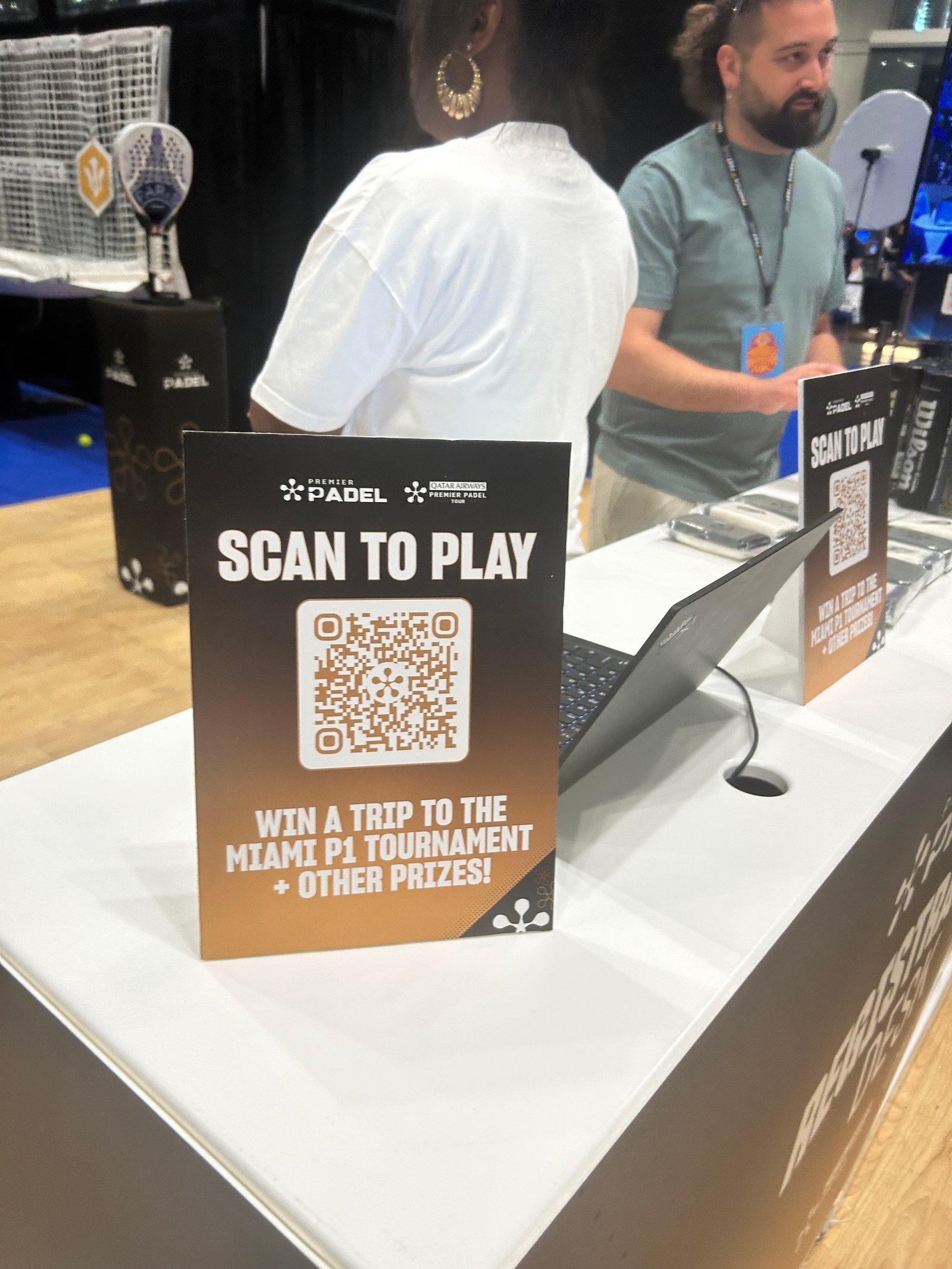
Premier Padel × Qatar Airways
Fanatics Fest NYC, padel activation booth
The prize
A trip to the Miami P1 Tournament + "other prizes"
What it actually asks for
Full sign-up: first/last name, email, phone with country code, gender, birthdate, country, city, plus three separate opt-in checkboxes for T&Cs, "Premier Padel news," and "Premier Padel partner marketing."
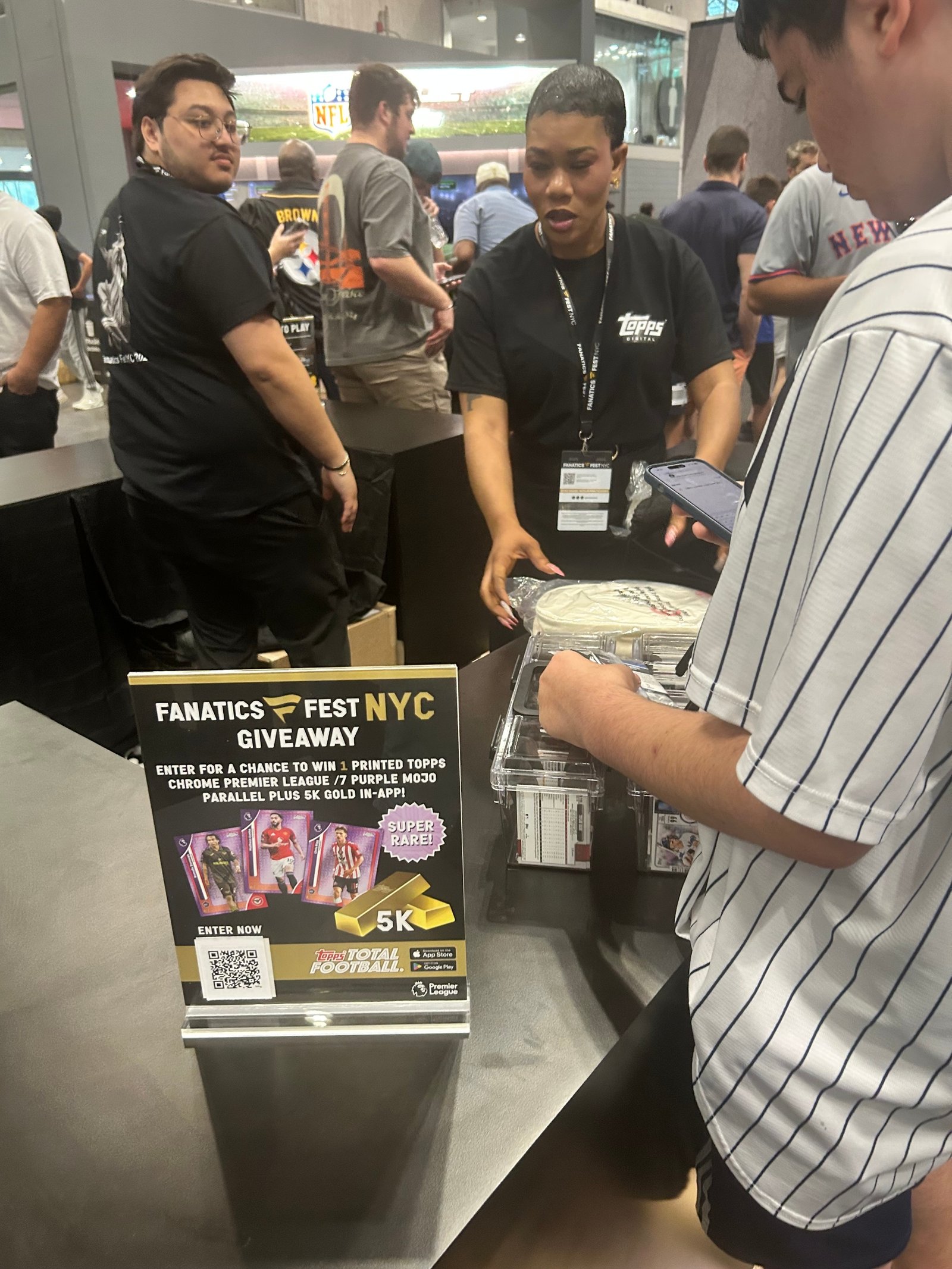
Fanatics × Topps Digital
Fanatics Fest NYC, trading-card / app booth
The prize
A /7 "Purple Mojo" parallel trading card plus 5,000 in-app gold
What it actually asks for
QR code funnels into the Topps Total Football app — entry requires an app account, which means another full sign-up before the prize can even be claimed.
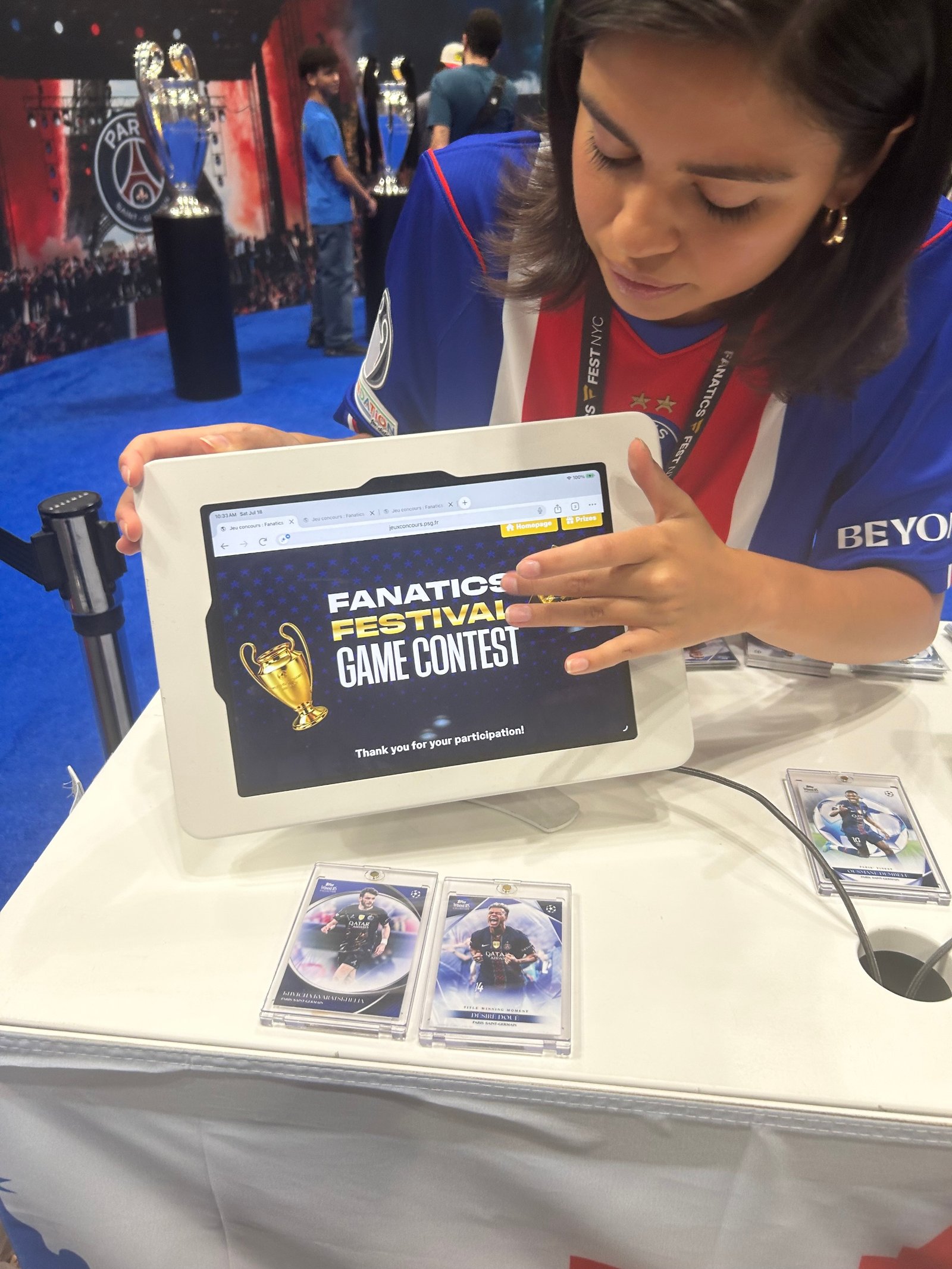
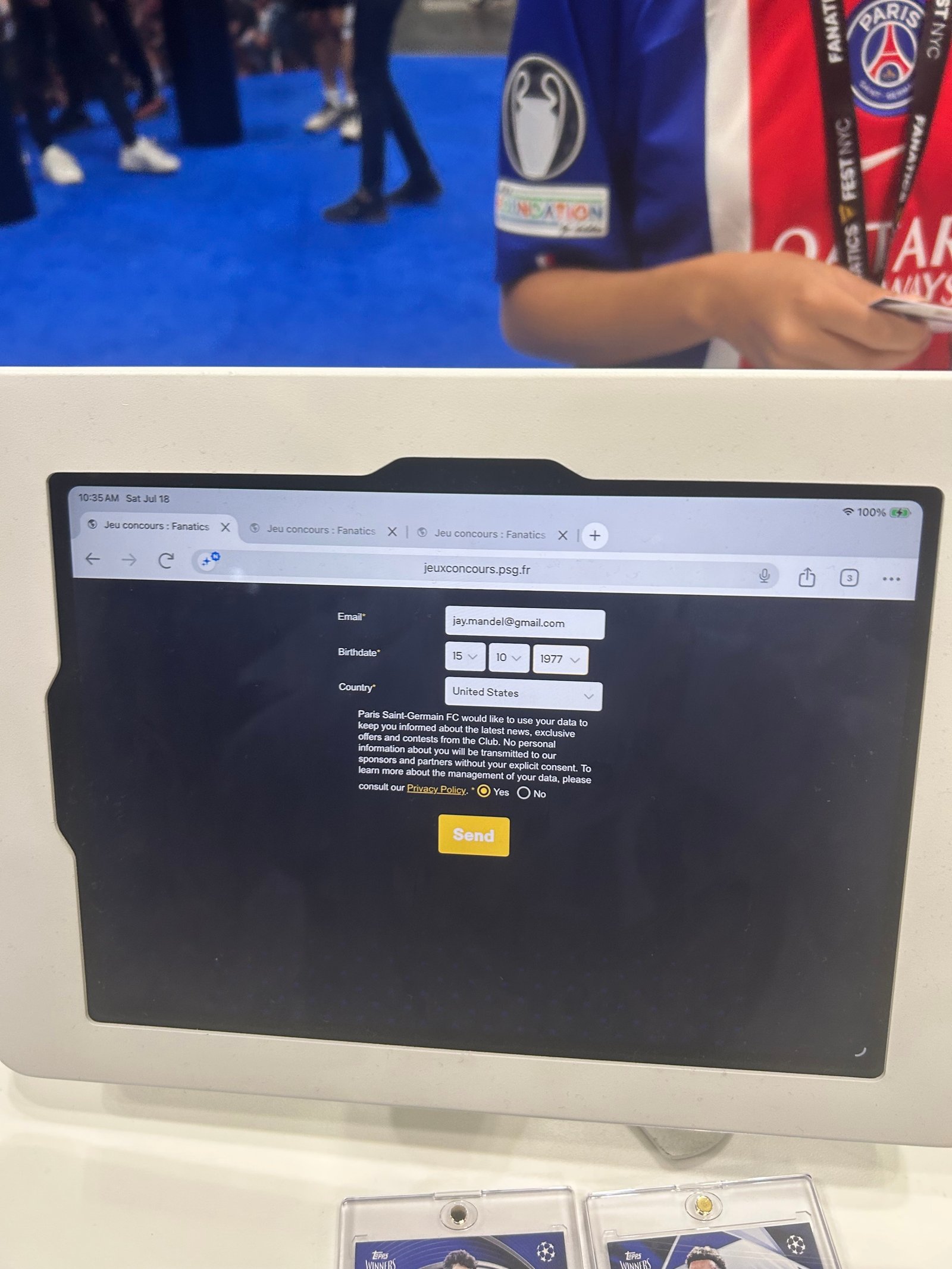
Paris Saint-Germain (Fanatics Festival)
Fanatics Fest NYC, PSG "Game Contest" tablet kiosk
The prize
Unspecified festival prizes tied to a Champions League trivia contest
What it actually asks for
Email, birthdate (day/month/year dropdowns) and country, plus a mandatory "Yes/No" on PSG using your data for "the latest news, exclusive offers and contests" — framed as a single required field, not a real choice.
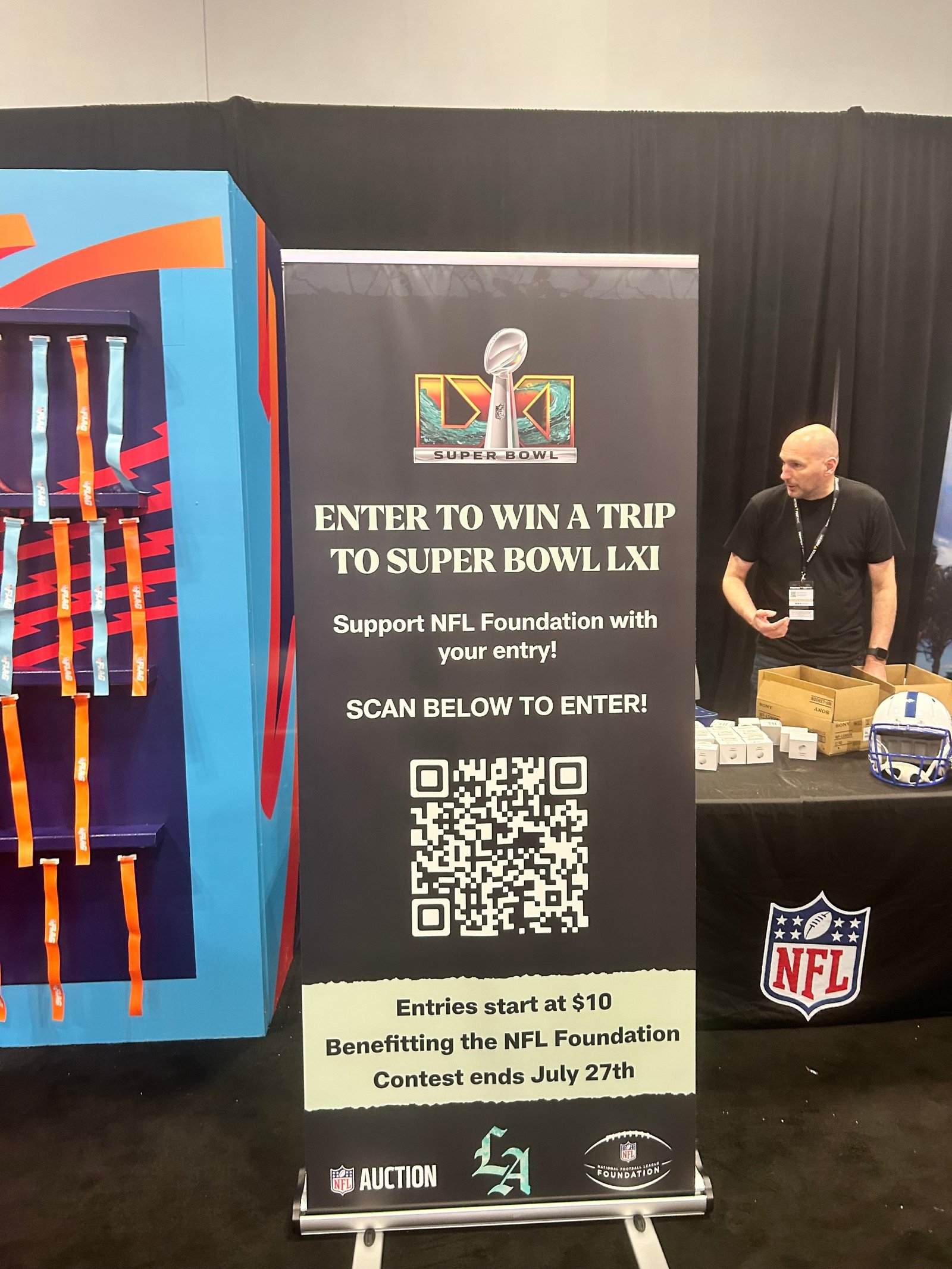
NFL Auction / NFL Foundation
Fanatics Fest NYC, NFL Auction booth
The prize
A trip to Super Bowl LXI
What it actually asks for
A QR-code raffle where "entries start at $10" — so the data capture is bundled with a paid transaction, benefiting from the same funnel as a genuine charitable auction.
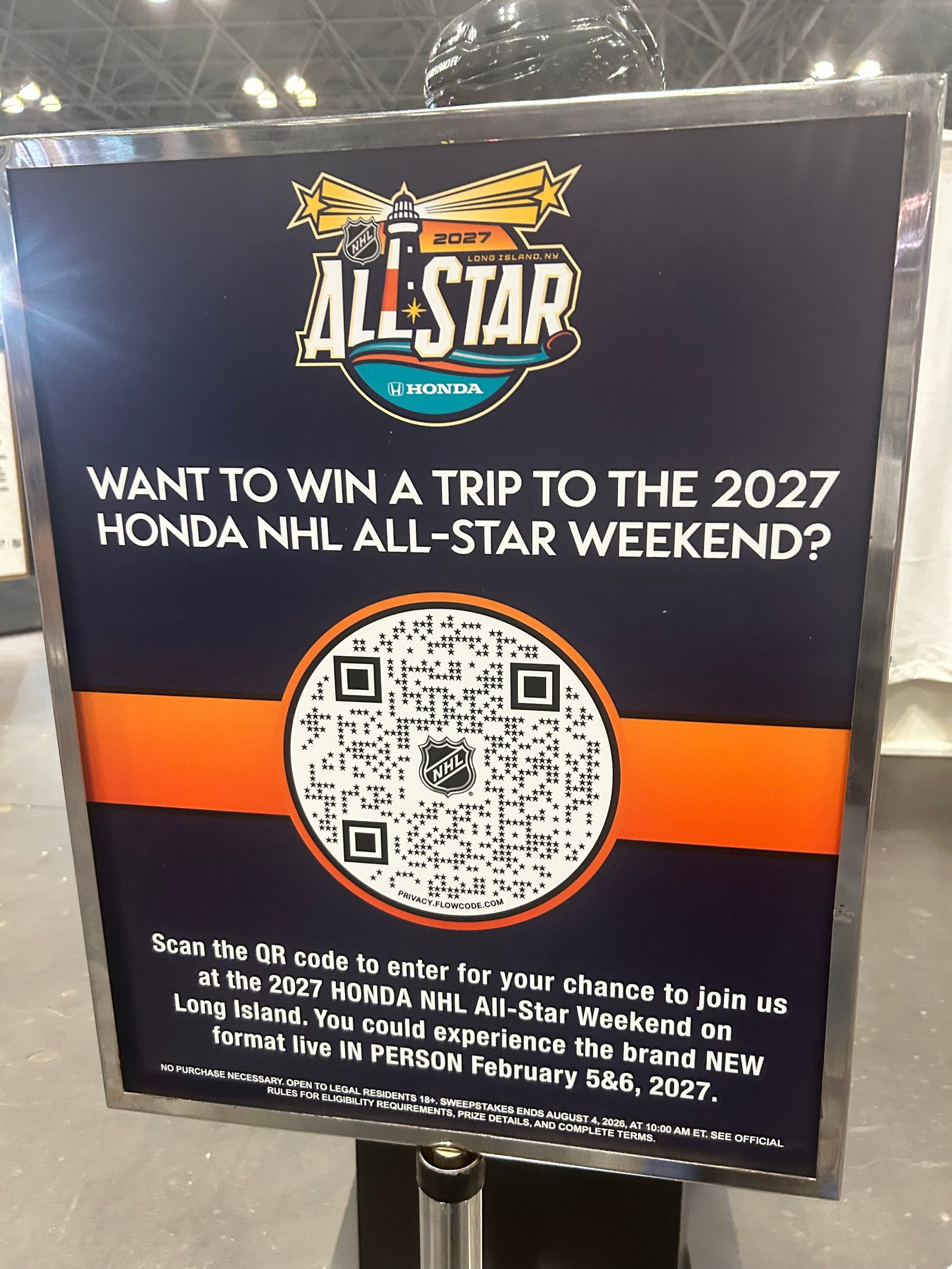
NHL × Honda (2027 All-Star Weekend)
Free-standing sweepstakes sign, arena concourse
The prize
A trip to the 2027 Honda NHL All-Star Weekend on Long Island
What it actually asks for
QR code routes through a third-party sweepstakes/marketing platform (flowcode-style redirect) before reaching any entry form — adding an extra, invisible data hop between the sign and the actual data collector.
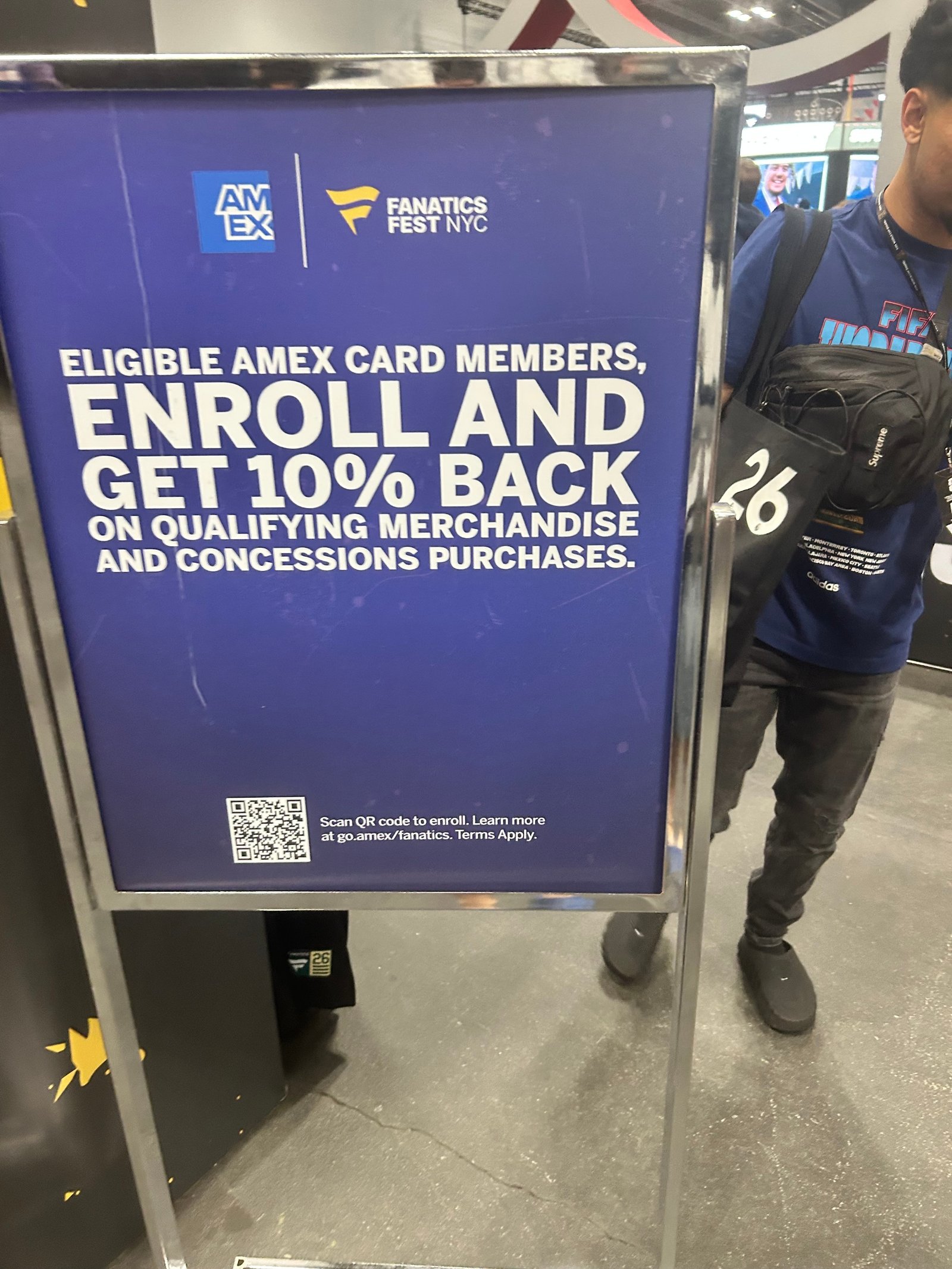
American Express × Fanatics Fest NYC
Venue-wide signage, checkout areas
The prize
10% back on qualifying merchandise and concessions purchases
What it actually asks for
Not framed as a sweepstakes at all, but the same mechanic — "scan to enroll" — links a purchase incentive to Amex enrollment and card-linked offer opt-in, harvesting purchase-category data as the price of the discount.
On-Site Documentation
What the booths looked like.
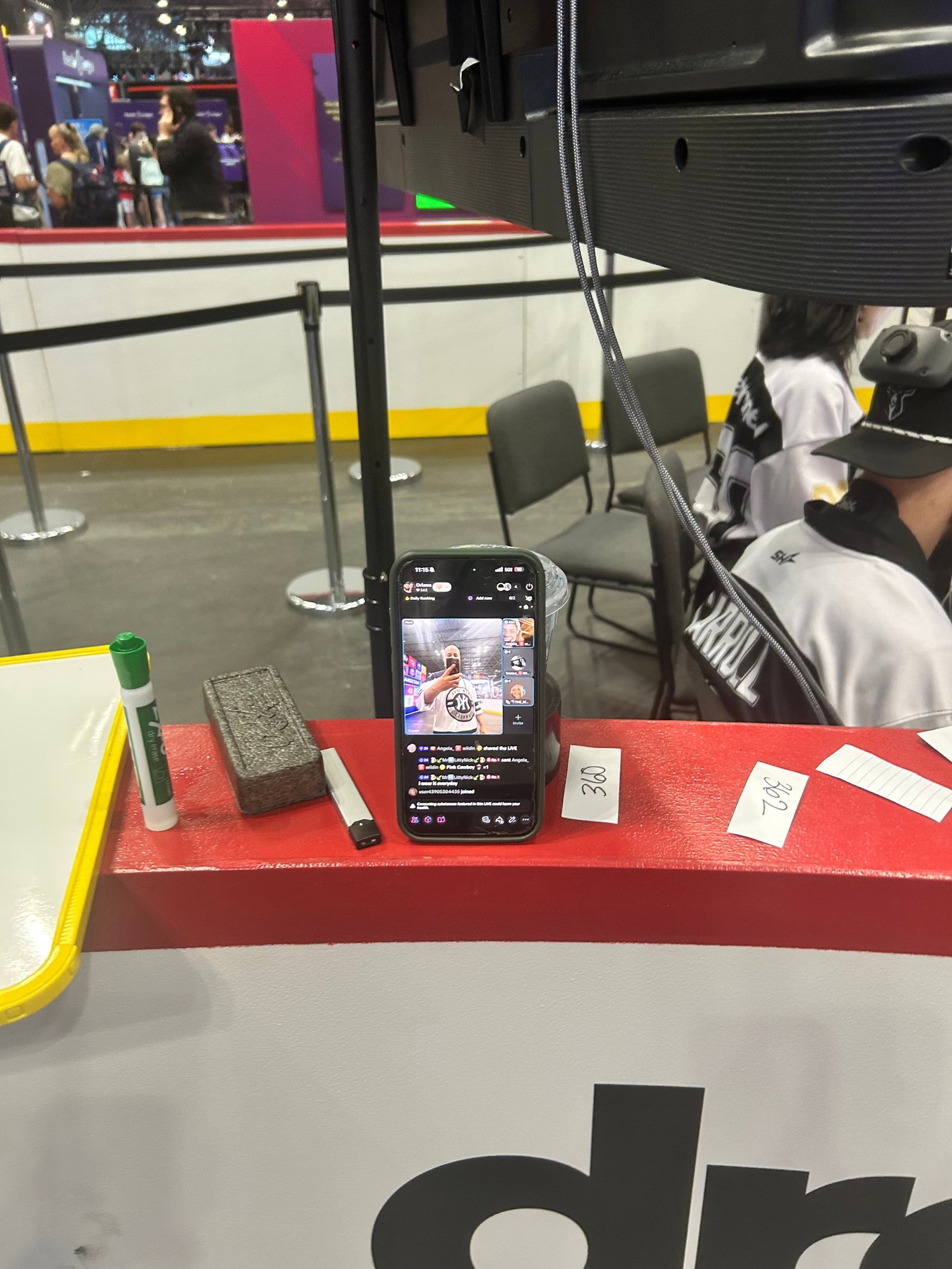
These photos were taken directly at Fanatics Fest NYC and related brand activations. Each shows a different brand's "scan to win" sign or entry form — all running the same data-collection playbook.
The Real Ask
Six fields no raffle actually needs.
A prize drawing legally requires almost none of this. A name and one contact method are enough to notify a winner. Everything past that is the marketing team's wish list, not the sweepstakes' requirement.
Email address
The core identifier — resold, shared with "partners," and used to build a permanent marketing profile.
Full birthdate
Not just an age-verification checkbox — day, month AND year, which is more identity data than most prizes are worth.
Country + city
Location data useful for geo-targeted ads and for enriching a broader data-broker profile.
Phone number
Frequently requested with country code — opens the door to SMS marketing and, in some funnels, WhatsApp or call outreach.
Gender
Rarely relevant to the actual prize; used almost exclusively for ad-audience segmentation.
"Yes/No" marketing consent
Framed as a required field rather than an optional checkbox, so declining often blocks entry entirely — consent in name only.
The Data-Collection Funnel
Every "scan to win" booth narrows down to the same six steps.
Each step below is narrower than the last on purpose — the funnel gets tighter as it filters a crowd of curious fans down to a smaller set of people who've handed over usable marketing data. Read it top to bottom: the prize gets you in, the fields get extracted, and the consent box locks it in before you ever see a confirmation screen.
The bait
Scan the QR code
A prize is dangled — a trip, a rare card, a discount. The code often redirects through a third-party sweepstakes vendor before you ever see a brand's own site.
The hook confirmed
Land on the entry page
A branded page reinforces the prize and urgency ("Enter now — ends soon") while quietly loading trackers and preparing the data-capture form.
The real product begins
Fill the sign-up form
What looks like a two-second raffle entry is actually a multi-field form — far more fields than a $30 prize should ever require.
The extraction
Hand over personal data
Each field below builds out a permanent marketing profile — most have nothing to do with picking a raffle winner.
The lock-in
Grant marketing consent
Consent boxes are pre-checked, bundled with required T&Cs, or phrased as one Yes/No where declining silently disqualifies the entry.
The payoff — for the brand
Entry confirmed
"Thanks for participating!" No odds disclosed, no visible record of what was submitted or who now owns it. You got a maybe. They got a lead.
The Fine-Grained Version
The same six steps, with every friction point spelled out.
- 01
Scan the QR code
Which itself is often a shortened redirect through a third-party sweepstakes vendor, not the brand’s own domain — the first hop nobody sees.
- 02
Land on a kiosk or your own phone
Half the booths hand you a shared tablet that a hundred strangers have already typed on; the other half push you to your own device, so you’re now doing data entry standing up in a crowded hall.
- 03
Fill a multi-field sign-up form
Name, email, birthdate (three dropdowns), phone with country code, gender, country, city — more fields than most bank sign-ups, for a raffle entry.
- 04
Check (or fail to uncheck) 2–3 consent boxes
T&Cs, "brand news," and "partner marketing" are frequently pre-checked, bundled, or required — so opting out of marketing means opting out of the sweepstakes.
- 05
Verify — sometimes a second time
Some funnels (like the Topps/Fanatics app flow) require a full app account and login on top of the web form before the entry actually registers.
- 06
Get a confirmation screen and nothing else
"Thank you for your participation!" — no prize, no odds disclosed, no visible way to see what data was just submitted or to whom.
Why This Is Worth Calling Out
It isn't one shady booth. It's an industry-standard template.
The time cost is deliberately hidden
A "quick scan to win" is marketed as effortless, but the actual form takes two to four minutes per booth. Multiply that across six or seven booths at one event and a visitor has spent twenty-plus minutes doing unpaid data entry for brands, for prize odds that are never disclosed.
Consent is designed to be frictionless to grant, not to refuse
Marketing opt-ins are pre-checked, bundled with required Terms & Conditions, or phrased as a single Yes/No where "No" quietly disqualifies the entry. That is the opposite of the plain, unbundled consent most privacy frameworks actually require.
It is the same funnel wearing a different jersey
Padel, football, hockey, trading cards, credit cards — the sport and the prize change, but the field list is identical: email, birthdate, country, city, phone, gender, consent. That consistency is the tell that this is a shared lead-generation template, not a bespoke fan experience.
The QR code obscures who actually receives the data
Several codes redirect through third-party sweepstakes and "flowcode"-style platforms before reaching a form. The fan sees "NHL" or "PSG" on the sign; they rarely see the marketing-tech vendor actually hosting and owning the submitted record.
"The badge said NFL. The tablet said PSG. The sign said NHL. The form asked the exact same six questions every time. That's not six brands running six promotions — that's one data-collection playbook, licensed out to whoever has a booth this weekend."
None of this is necessarily illegal — most booths did disclose terms, a privacy policy link, and "no purchase necessary" language somewhere in the small print, exactly the kind of disclosure TrustGap checks for. But disclosed and disclosed honestly, plainly, and proportionately to what's being collected are different things. A raffle for a $30 trading card should not require the same personal-data footprint as opening a bank account — and at Fanatics Fest, several of them effectively did.
Protect Yourself At The Next Booth
Five things to do before you scan the next "Scan to Win" sign.
- 01Treat every "scan to win" booth the same way you’d treat a cold-call data request: the prize is the bait, the completed form is the product.
- 02A full birthdate and gender are almost never needed to run a raffle — if a form asks for them anyway, the sweepstakes is a data-collection exercise with a prize attached, not the other way around.
- 03Read consent checkboxes literally. If unchecking "partner marketing" also disqualifies your entry, that is not optional consent — flag it, and enter anyway only if you’re fine with the trade.
- 04Use a secondary or alias email and skip the phone number field when it isn’t marked required — most of these forms accept an empty phone field even when it looks mandatory.
- 05Expect zero transparency on odds or entrant volume. None of the six booths TrustGap documented disclosed how many people had entered or what the actual odds of winning were.
Don't keep this to yourself
You just read what most people never bother to check. That's worth passing on.
One share puts real receipts in front of someone who's about to trust an ad. Pick a platform — the caption's already written.
Receipts, by the numbers
Real data, pulled live from the TrustGap database — not made up, not rounded up. We're a young project, so these numbers start small on purpose. Every analysis run adds to the count, so watch this space grow.
0+
Companies scored on TrustGap
0+
Reviews published
0
Avg. points a brand loses to its own terms
0+
Accountability scores tracked over time
Suspect a brand's sweepstakes fine print? Run it through TrustGap.
Type any company's name and see how its marketing claims stack up against its actual terms, privacy policy and disclosures — the same standard applied to every booth in this report.
Field observations documented on-site at Fanatics Fest NYC and related activations. Not legal advice — always read the specific terms and privacy policy of any sweepstakes before entering.